
Types of LED Facade Lighting Techniques
Historically, halogen lights were commonly utilized as a conventional choice for illuminating building facades and residences. However, due to their inherent lack of energy efficiency, halogen lights were primarily reserved for prominent structures, often employed for artistic effects rather than widespread practical use.
As the popularity and inclination toward LED lights continue to surge, a broader spectrum of individuals and architectural entities can now harness the aesthetic advantages of facade lighting. The adoption of LED lights brings forth attributes of energy efficiency, dependability, and longevity. Consequently, the integration of these lights for artistic illumination becomes more attainable. The versatility of LED lights, available in an array of colors, coupled with their capability to emit a more concentrated beam of light, facilitates a heightened precision in focus and artistic application.
This implies that creating a building as the primary focal point becomes more straightforward.
A. Accent Lighting
Accent lighting, a sophisticated technique in facade lighting, involves deliberately using illumination to accentuate and showcase specific architectural elements, features, or design details of a building’s exterior. Unlike general lighting, which provides overall illumination, accent lighting serves a more artistic purpose by drawing attention to focal points, adding depth, and creating visual interest.
Skillfully employing accent lighting is a potent technique that empowers architects and designers to shape the visual interpretation of a structure. By carefully selecting and positioning light fixtures, they can cast focused beams onto critical areas, bringing them to the forefront of the viewer’s attention. Architectural intricacies such as ornate facades, intricate carvings, pillars, and distinctive textures are elevated from obscurity to prominence through the nuanced interplay of light and shadow.
Accent lighting can transform an ordinary building into an extraordinary architectural masterpiece. For example, a historical building with intricate stonework can be brought to life at night, allowing observers to appreciate the craftsmanship that might otherwise go unnoticed. Modern structures can also benefit, as accent lighting adds a layer of sophistication and dynamism to sleek designs, making them stand out in the urban landscape.
B. Wall Washing
Wall washing is a versatile lighting technique that embraces the entirety of vertical surfaces, enriching our visual experience by enhancing textures, revealing subtleties, and fostering a harmonious ambiance in architectural and urban settings.
C. Grazing
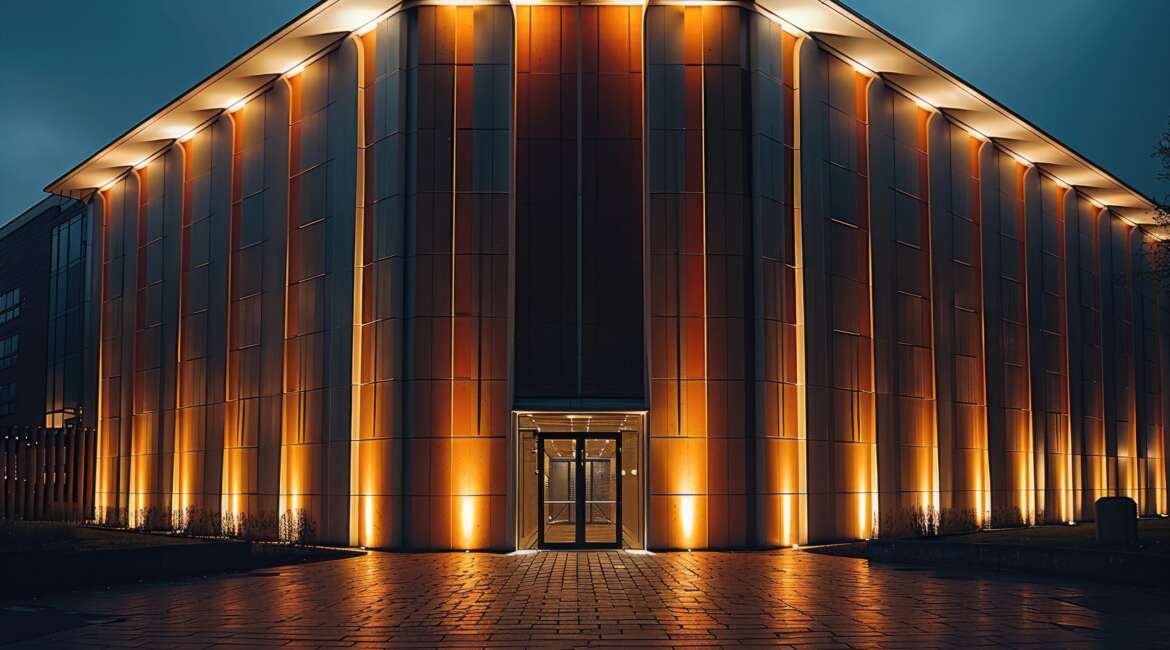
Grazing lighting, a captivating facet of facade illumination, involves positioning light fixtures close to the vertical surface of a building or structure. These fixtures project light across the surface at a very shallow angle, allowing the light to graze the surface. This technique creates striking visual effects by emphasizing the structure’s textures, patterns, and relief details. Grazing lighting, with its ability to create depth and shadow, is a versatile tool in the arsenal of lighting designers, enhancing the architectural aesthetics and storytelling of a building.
D. Silhouetting
The silhouetting technique is a testament to the transformative power of light. It reduces subjects to their essential forms, creating bold and captivating outlines that draw the viewer’s gaze. When applied to artistic and minimalist architectural designs, silhouetting adds depth, drama, and a touch of magic to the built environment, enhancing our appreciation of the interplay between architecture and light.
Understanding the Silhouetting Technique: Silhouetting is a captivating and visually compelling technique within facade lighting and architectural illumination. It revolves around strategically positioning light sources behind a building or object, effectively backlighting it. The result is a striking visual effect where the subject is rendered as a dark silhouette against a bright background. Silhouetting relies on the interplay between light and shadow to create bold, dramatic outlines that draw the viewer’s attention and evoke powerful emotional responses.
Creating Captivating Outlines of Buildings and Objects: Silhouetting represents a masterful blend of art and science. By positioning light sources strategically, designers can obscure the fine details of a building or object, focusing instead on its overall form and shape. This approach accentuates the structure’s contours, creating bold and captivating outlines that transform ordinary structures into striking, memorable works of art.
One of the critical advantages of silhouetting is its ability to emphasize simplicity and elegance. The technique distills architectural and design elements to their essence by reducing a subject to its core shape. This can be particularly effective in minimalist architectural designs, emphasizing clean lines, uncluttered forms, and the interplay of light and shadow. Silhouetting adds a layer of sophistication to such designs, making them stand out and leaving a lasting impression.
Applications in Artistic and Minimalist Architectural Designs: Silhouetting finds its most profound expression in artistic and minimalist architectural designs. In artistic installations, it can be employed to create temporary or permanent works that captivate the public’s imagination. For example, strategically placed silhouetted sculptures in an urban park can transform the nighttime experience, turning a simple walk into a journey through an art gallery of shadows and light.
In minimalist architectural designs, silhouetting plays a vital role in highlighting the purity of form. A modern building with clean lines and stark geometries can be elevated to a new level of aesthetic appeal when silhouetted against the night sky. It reinforces the design’s deliberate simplicity and serves as a beacon of contemporary design within an urban landscape.
E. Shadow Play
Shadow play in facade lighting transcends traditional illumination. It introduces an element of storytelling, cultural resonance, and artistic expression to architecture. By manipulating light and shadow to add depth and dimension, architects and designers breathe vitality into their designs, engaging viewers in a dynamic and ever-evolving visual narrative. This technique enriches the built environment, fostering a deeper connection between people and the architectural spaces they inhabit.
Overview of Shadow Play in Facade Lighting:
Shadow play, a captivating facet of facade lighting and architectural illumination, is an artistic endeavor that centers around manipulating light and shadow to create depth, dimension, and dramatic visual effects on building surfaces. It involves strategically placing light fixtures to cast intricate, dynamic shadows that interact with architectural elements. Shadow play in facade lighting transforms static buildings into vibrant canvases, engaging viewers’ imaginations and emotions through its play of light and dark.
Manipulating Light and Shadow to Add Depth and Dimension:
At its core, shadow play is about introducing a new layer of storytelling to architectural designs. By carefully positioning light sources, designers can cast shadows highlighting the nuances of a building’s structure, surfaces, and details. The interplay between light and shadow enhances depth, adding layers of complexity that evolve with changing angles and the passage of time.
This technique fosters a sense of movement and fluidity in architecture. The shifting shadows create an ever-changing visual experience, inviting viewers to explore the building from various perspectives. It adds an element of surprise as shadows reveal hidden details and create optical illusions, such as the appearance of texture or patterns that may not exist on the physical surface. In essence, shadow play breathes life into architecture, making it a dynamic, living entity.
Applications of Different Facade Lighting
Understanding the application of facade lighting is crucial and dramatically hinges on the architectural design. Selecting the appropriate lighting type depends on the building’s facade, desired aesthetics, and the ambiance you wish to create. Here are some typical applications of facade lighting employed by lighting experts today.
1. Transparent Facade
Glass buildings pose unique lighting challenges due to natural light reflection. To achieve desired lighting effects, precise light placement is crucial. Indoor ceiling wash lights can create a stunning external brightness reflection.
Alternatively, you can strategically place minimal lights at the building’s base, utilizing the glass facade’s reflective properties. Another option is to use light lines on each floor to delineate divisions.
2. Solid Facade
These are facades with smooth surfaces. Although wash lighting is commonly used, there’s room for artistic expression. Using various lights and layering techniques, you can create intriguing shadows, patterns, shapes, and lines using multiple lights and layering techniques.
However, please exercise caution when designing patterns; they should enhance, not overshadow, the building’s architectural beauty.
3. Banded Facade
This architectural style features alternating bands of different materials, like glass windows and concrete, comprising the building’s exterior. The key objective is to accentuate these distinctive bands using balustrade lights.
Enhancing the horizontal bars and creating contrast between light and dark areas, with windows brighter than concrete sections, is recommended.
4. Perforated Facade
This design incorporates perforated elements to allow natural light into the building while enabling light projection from within. Several techniques can illuminate such facades, primarily focusing on the windows. During daylight hours, windows often remain naturally lit, appearing dark.
However, you can use window lights at night to create a dynamic play of brightness and shadow. Alternatively, placing floodlights at the base of the building can selectively illuminate specific windows, drawing attention to their frames.
Another option is to use recessed lights on individual windows, preceding leading lights for a tailored approach.
With Vertical Divisions
When a building’s facade features vertical divisions, emphasizing them can be achieved using narrow ground-based beams, such as spotlights or floodlights. A combination of uplight and downlights can create a dramatic effect, especially if there are captivating architectural elements on the ceiling or rooftop.
Vertical lines can be accentuated using spotlights at the top, bottom, or sides.
With Horizontal Divisions
To accentuate a structure with distinct horizontal divisions, use shadows effectively—place lights at the structure’s base to create pronounced shades that enhance its aesthetics. The interaction between light and shadow brings life to the facade and improves its texture. Position lights closer to the system to achieve longer shadows or place them further away for a better overall effect.
With Recessed or Protruding Sections
Recessed or protruding sections in building structures benefit from pronounced shadows to emphasize distinct areas of the facade. A combination of various facade lights can be employed. Uplights work well for recessed sections, highlighting corners. Contrasting light colors can further magnify the differences, but the precise alignment of light beams with each unit is essential.
Modern skyscrapers and commercial buildings have embraced LED facade lighting as a transformative design element. This cutting-edge illumination enhances visibility and elevates architectural aesthetics, turning these structures into beacons of innovation and creativity.