
Effect of LEDs on Post-Harvest Preservation
One of the most significant functions of food processing procedures is to reduce quality loss. Experts in agriculture continue to confront issues such as fruit rotting after harvest and the protection of standing crops from disease assault.
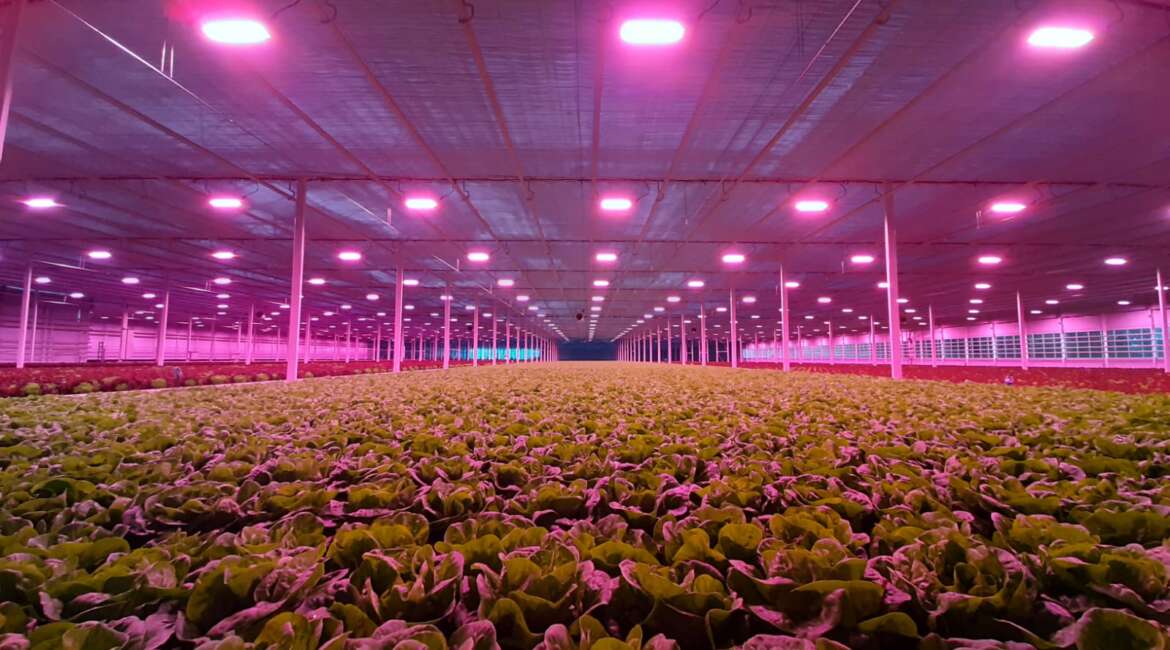
LEDs are gaining popularity as a useful medium for sustainable agricultural operations. Various studies have been conducted to support the effectiveness of LED treatment in food system. Tomatoes can be pre-treated with blue light to lengthen their ripening period before being stored in the dark. The authors pre-treated the mature green tomatoes with blue light (440–450 nm) emitted from blue light emitting diodes (LEDs) for one week and found that the pre-treatment of green tomatoes with blue light had delayed the softening. These tomatoes ripened fully after three weeks of storage in darkness due to the increased levels of lycopene. Blue light treatments for 5 to 7 days decreased soft rot area, mycelial development, and sporulation of several fungi on the surface of fruits when compared to white light LED and darkness.
Disease resistance to a wide range of phytopathogens can be induced in standing crops using particular wavelengths of light, particularly red, blue, and green LEDs. When compared to the effects of white fluorescent light, red light reduces lesion growth, activates the expression of defense-associated genes, and also promotes the synthesis of stilbenic components. Plant defensive responses are aided by stilbenes, also known as phytoalexins.
Furthermore, after using different wavelengths of LED illumination of plant products, enhanced production of stilbenes was detected along with increased expression of 16 defense-related genes. LEDs can potentially cause the expression of defense-related genes and as a result, the production of ginsenosides in Ginseng plants.
Effect of LED treatment in prevention of post-harvest losses
Action of LED against microbes
Recently, it was found that various diseases can be inactivated by using light from LEDs. Listeria monocytogenes can survive a variety of stresses, which contributes to its widespread dispersion and distinct pathogenic characteristics. Using 405-nm LED illumination at 4 °C for 150 min, the survival of L. monocytogenes was studied after exposure to oxidative stress (0.04% H2O2), UV irradiation (253.7-nm), low temperature (4 °C), osmotic pressure, SGF (pH 2.5), or bile salts (2%).
The pathways responsible for differences in stress tolerance were uncovered by studying the transcriptional responses and membrane integrity of L. monocytogenes. It was found that 405-nm LED treatment lowered L. monocytogenes resistance to all stresses, suggesting that it might be utilized effectively for prevention of L. monocytogenes contamination across the food-processing chain-line, from production to consumption.
Furthermore, the antibacterial impact of blue 460-nm LEDs on Salmonella in orange juice was investigated. Salmonella enterica serovars Gaminara, Montevideo, Newport, Typhimurium, and Saintpaul were injected into pasteurized orange juice and illuminated with 460-nm LEDs at irradiances of 92, 147.7, and 254.7 mW/cm2 at 4, 12, and 20 °C. The findings revealed the efficacy of 460-nm LEDs in preserving fruit juices in retail markets and reducing the danger of salmonellosis. Depending on the target requirements, LED systems can be programmed to deliver continuous or pulsed treatments.