
Aesthetic Lighting for Open-Space Offices
Suspended LED lighting is a popular and effective solution for open-space offices, offering a range of benefits from improved aesthetics to increased productivity and energy efficiency.
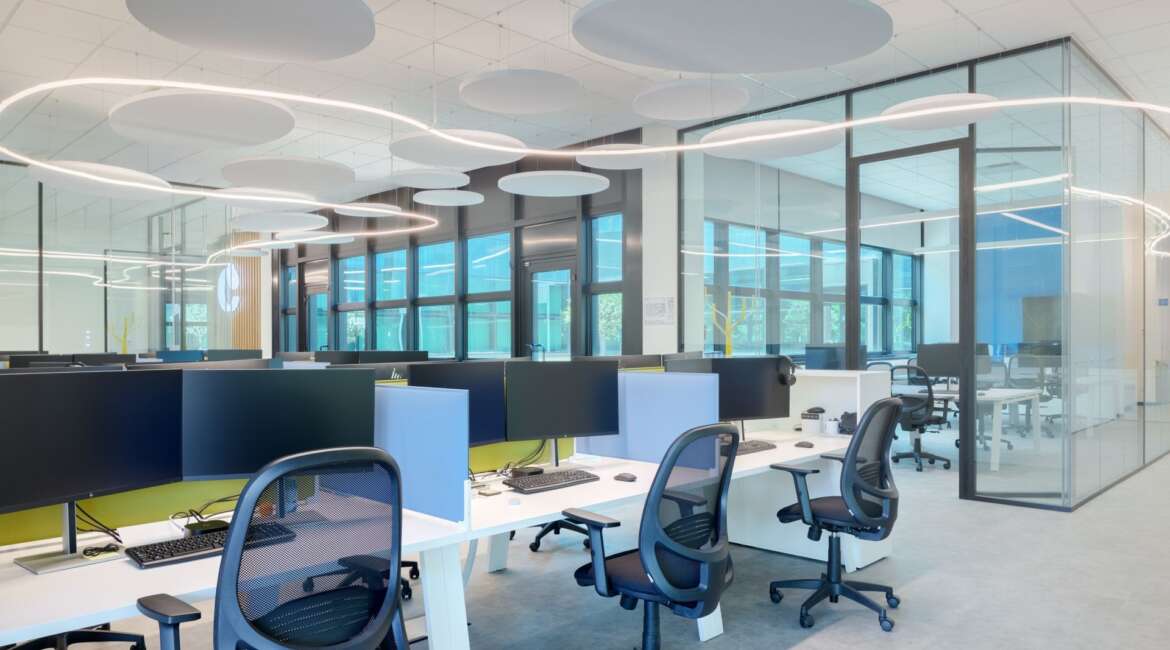
Flexible light tube is an aesthetic efficient option for open-space offices, capable of freely rotating in space, creating indefinite geometries. It seamlessly integrates into both indoor and outdoor spaces thanks to fastening elements that disappear within the cross-section, allowing for countless applications across a wide range of settings. Its unique combination of light quality, IP protection rating, and flexibility makes it a versatile lighting solution.
Benefits of Suspended LED Lighting in Open Offices
Improved Employee Well-being and Productivity: Proper lighting is crucial for employee health and performance. Suspended LED lights can reduce eye strain, headaches, and fatigue, which are often caused by poor lighting. By providing even and consistent illumination, they create a more comfortable working environment. Some systems can even mimic natural daylight patterns, which can help regulate circadian rhythms, leading to better sleep and increased alertness.
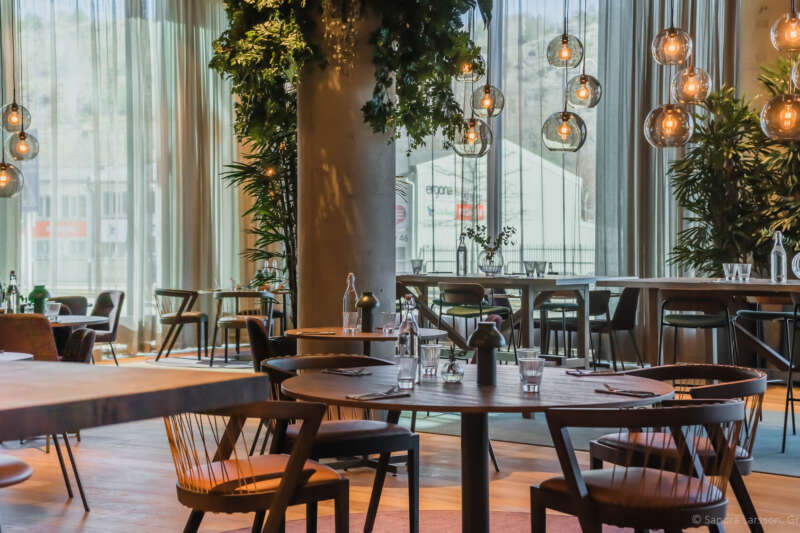
Design and Aesthetics: Suspended LED fixtures are known for their sleek, modern, and minimalist design. They can be used to create a sophisticated and professional look, and their versatility allows them to be a design statement in a space. They can also be used to visually divide large open-plan areas into different zones, such as reception, collaborative, or quiet work areas.
Versatility and Customization: Suspended lighting is highly versatile. The height at which the fixtures are suspended can be adjusted to provide a broad pool of light or a more concentrated beam for specific tasks. Many systems offer both direct (downward) and indirect (upward) lighting, which helps to eliminate the “cave effect” in open ceiling spaces and create a more balanced ambiance.
Integration with Smart Technology: Modern suspended LED lighting systems can be integrated with smart controls. This allows for features like dimming, motion sensors, daylight harvesting (adjusting light levels based on natural light), and even tunable white lighting, where the color temperature can be changed throughout the day to support different activities and times.